What If Your Music App Could Teach You to Play Without Lessons?
Imagine cooking dinner while your favorite song plays, and suddenly, you realize you’re not just humming along—you’re learning the piano part, note by note, right from your phone. What if the music streaming app you already use every day could quietly guide you to play an instrument, no teacher needed? It’s not magic—it’s how technology is quietly reshaping how we learn, grow, and connect with the things we love. For years, we’ve thought of music apps as entertainment tools, perfect for setting a mood or filling the silence. But now, they’re doing something deeper: inviting us to become creators, not just listeners. And the best part? You don’t need a music degree, expensive lessons, or hours of free time. Just your phone, your curiosity, and a few spare moments.
The Soundtrack of Your Day Might Be Holding a Secret
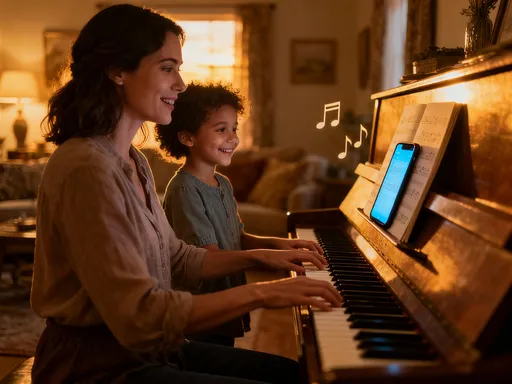
You know that moment—your child is sitting at the piano, brow furrowed, fingers stiff, trying to memorize the same four measures for the third time. You want to help, but you never learned either. Or maybe it’s you, standing in front of a dusty keyboard in the corner of the living room, wondering if it’s too late to finally learn that song you’ve loved since high school. We’ve all been there. Music feels like a gift some people are born with, not something you can just pick up. But what if that’s no longer true?
Today’s music streaming apps are quietly evolving into something more than just playlist curators. They’re becoming gentle teachers, hiding in plain sight. The same app that knows your love for acoustic folk or 80s pop now offers tools that let you learn those songs—directly from the tracks you already play on repeat. No separate lesson app, no complicated setup. Just tap, listen, and start playing. The secret? These platforms are designed to meet you where you are: in the middle of a busy life, with little time and even less patience for rigid schedules or intimidating sheet music.
Think about how often you listen to music. During your morning walk, while folding laundry, or in the car with the kids singing along. That familiar soundtrack isn’t just background noise anymore—it’s a learning path. And the shift is subtle. One day, you’re tapping your foot to a beat. The next, you’re noticing the bassline, then humming the melody, then—almost without realizing it—trying to mimic it on a keyboard or guitar. The technology doesn’t shout. It whispers. It waits for your curiosity to spark and then meets you with support, right when you’re ready.
How Streaming Apps Turn Listeners into Musicians
Let’s be honest—learning an instrument used to feel like climbing a mountain. You needed a teacher, a method book, weekly lessons, and a lot of courage to face the early stages of sounding, well, terrible. But today’s music apps are changing the climb into a gentle walk. They do this by breaking songs into digestible pieces, letting you focus on one part at a time. Want to learn that catchy guitar riff in your favorite song? The app can isolate the guitar track, slow it down without changing the pitch, and loop just the section you’re stuck on.
It’s like having a patient tutor who never gets frustrated. You can replay that eight-second clip fifty times, and the app doesn’t judge. It just waits. And because you’re learning a song you already love, the motivation stays high. You’re not practicing scales because someone told you to—you’re learning the intro to ‘Let It Be’ because you’ve always wanted to play it at a family gathering. That emotional connection makes all the difference.
Many of these apps now include interactive features that show you exactly where to place your fingers, whether you’re on a real piano or just tapping on your screen. Some even use your phone’s microphone to listen as you play and give gentle feedback—‘Try that note again’ or ‘You’re on the right track!’—turning practice into a conversation. It’s not about perfection. It’s about progress. And because the tools are built into the apps you already use, there’s no extra step, no mental hurdle of opening a ‘learning’ app. The learning happens inside the joy, not outside of it.
Learning in the Gaps: Practice That Fits Your Life
One of the biggest reasons adults give up on learning music is time. ‘I don’t have an hour a day,’ you might say. ‘I can’t commit to lessons.’ But here’s the truth: you don’t need to. What if you could learn a new chord while waiting for your coffee to brew? Or practice a melody during your lunch break? That’s the power of micro-learning—short, focused bursts of practice that fit into the cracks of your day.
Modern music apps are designed with real life in mind. They offer five-minute tutorials that sync with your current playlist. So if you’re listening to Ed Sheeran, the app might suggest, ‘Want to learn the chorus of “Perfect” on piano?’ And with just a tap, you’re guided through it—one hand at a time, at your own pace. No pressure. No schedule. Just you, your phone, and a few quiet moments.
This kind of learning isn’t about mastering a piece in a week. It’s about building consistency without burnout. Think of it like brushing your teeth—small, daily actions that add up to big results over time. You might only spend seven minutes today learning the left-hand part of a song, but tomorrow, you’ll remember it. And the day after, you’ll add the right hand. Before you know it, you’re playing a full song—and it feels like a gift you gave yourself.
The beauty is that these moments don’t have to be perfect. You can practice in your pajamas, with the TV on in the background, or while keeping an ear out for the baby monitor. It’s not about creating a performance. It’s about creating a habit. And when learning fits into your life instead of fighting against it, you’re far more likely to stick with it.
The Family That Plays Together, Learns Together
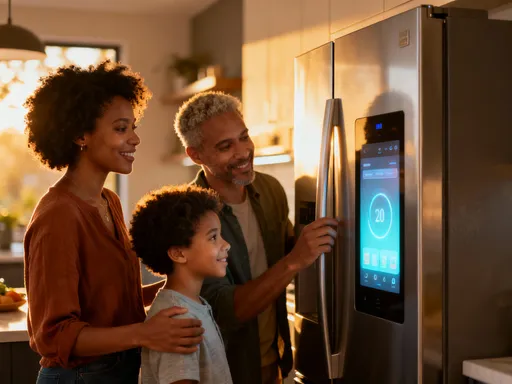
Music has always had a way of bringing people together. Think of family road trips with everyone singing along, or holiday gatherings where someone grabs a guitar and suddenly the whole room is humming. Now, that same magic can become a shared learning experience. With music apps that teach through songs, the whole family can learn together—no experience required.
Imagine this: your ten-year-old wants to learn the theme from their favorite movie. You pull up the song on the app, and together, you break it down. They take the melody on the keyboard, you handle the chords on a ukulele, and your partner keeps the beat on a hand drum. It’s not a recital. It’s a moment of connection. There’s laughter when someone misses a note, encouragement when someone gets it right, and a quiet pride when you play through the whole song together.
These apps are especially powerful for parents who want to share music with their kids but never learned themselves. You don’t have to be the expert. You can be the co-learner. And that’s a beautiful thing. It shows your children that it’s okay to be a beginner, that learning is a lifelong journey, and that trying something new is worth the awkward stages. Plus, there’s something deeply bonding about creating sound together—about making music, not just consuming it.
And it doesn’t have to be loud or complicated. A simple melody on a keyboard, a few chords on a guitar, even a rhythmic clapping game—these small moments build confidence and connection. Over time, music becomes a language your family speaks, a way to express joy, comfort, or just silly fun. It’s not about talent. It’s about togetherness.
From Fumbling to Flow: Building Confidence One Song at a Time
Let’s talk about fear. The fear of failing. The fear of sounding bad. The fear that you’re too old, too busy, or too ‘not musical’ to even start. These feelings are real, and they stop so many of us from trying. But what if you could start small—so small that failure doesn’t even feel like failure?
That’s exactly what these music apps offer. They break learning into tiny, achievable steps. First, you learn one note. Then two. Then a short phrase. Each step comes with encouragement, visual cues, and the ability to go back and repeat as many times as you need. There’s no one watching. No grades. No pressure to perform. Just you, moving at your own pace.
I think of a woman I read about—mid-40s, mom of two, never touched a piano. She started with a simple lullaby because she wanted to play it for her youngest child. At first, her fingers felt clumsy. She missed notes. But the app celebrated every small win: ‘Great job! You played the first line!’ Over weeks, she built confidence. And one night, as her daughter drifted off to sleep, she played the whole song—slowly, softly, perfectly. Tears filled her eyes. It wasn’t about the music. It was about proving to herself that she could still learn, still grow, still create beauty.
That’s the real power of this technology. It’s not just teaching music. It’s rebuilding self-belief. Every time you play a phrase you couldn’t play last week, you’re reminding yourself: I am capable. I am learning. I am growing. And that confidence doesn’t stay at the piano—it spills into everything else.
Beyond the Headphones: When Digital Meets Real Instruments
Some people worry that technology is replacing real music. That we’ll all just tap on screens and forget the feel of real keys, the vibration of a guitar string, the breath behind a flute. But that’s not what’s happening. Instead, technology is becoming a bridge—a gentle invitation to pick up a real instrument.
Think of it like training wheels. The app helps you learn the notes, the rhythm, the pattern. But when you’re ready, you take it to the piano, the guitar, the ukulele. And that moment—when your fingers press real keys, when you hear the rich, warm sound of a real instrument—is magical. It’s deeper, richer, more satisfying than any digital sound.
These apps don’t replace real instruments. They prepare you for them. They take away the fear of the unknown. You’re not staring at a blank keyboard wondering where to start. You already know the first note. You’ve practiced it on your phone. Now, you just need to transfer that knowledge to your hands. And the joy of making real sound—of creating something with your own hands—is unmatched.
Plus, many apps now sync with real instruments. Some keyboards connect via Bluetooth, lighting up the right keys as the song plays. Others use your phone’s camera to watch your fingers and guide you in real time. It’s like having a teacher sitting beside you, but one that fits in your pocket. And the best part? You don’t need an expensive setup. A simple, affordable keyboard or secondhand guitar is all you need to begin.
The Quiet Revolution: How Music Learning Enriches Your Inner Life
In the end, this isn’t really about music. Not entirely. It’s about what music does to us—how it slows us down, how it focuses our minds, how it reconnects us with joy. Learning music, even just a little, changes the way we move through the world. It makes us more patient. More present. More in tune with ourselves.
Studies have shown that playing an instrument reduces stress, improves memory, and even supports emotional resilience. But you don’t need a study to feel it. You feel it when you finally play a song all the way through. You feel it when your child runs into the room and says, ‘Mom, you’re playing the piano!’ You feel it in the quiet moments, when the house is still, and you sit down just to play for yourself.
And in a world that often feels loud, fast, and overwhelming, that kind of calm is priceless. Music becomes a form of self-care—a way to nurture your mind, your heart, your spirit. It’s not about becoming a performer. It’s about becoming more alive. More expressive. More connected to the beauty around you.
So the next time your favorite song comes on, listen a little differently. Not just with your ears, but with your hands, your heart, your imagination. Ask yourself: What if I could play this? What if I could learn it, right now, in this moment? Because the tools are here. The time is now. And the music? The music has always been waiting for you.