What If Editing Family Photos Could Actually Bring You Closer?
Have you ever scrolled through old family photos and felt a pang of nostalgia—or frustration? Blurry shots, poor lighting, mismatched filters. But what if the simple act of editing those pictures together could strengthen your family’s connection? I’ve discovered that using photo editing apps regularly isn’t just about prettier images—it’s become a quiet, meaningful way my family shares memories, aligns on stories, and even resolves tensions. It’s not magic. It’s intentional tech use. What started as a way to fix bad lighting turned into something much deeper: a shared language of care, shaped one pixel at a time.
The Moment I Realized a Photo App Was Doing More Than Filters
It was a rainy Sunday afternoon when I pulled up an old photo from last summer’s family reunion. You know the one—everyone crammed under a tent, half the faces cut off, someone blinking, the colors washed out from harsh sunlight. I sighed, ready to delete it like so many others. But then my teenage daughter peeked over my shoulder and said, 'Wait, don’t get rid of Grandma’s hat! That was the best part.' I smiled and opened our shared photo album in a cloud-based editing app we’d started using a few months before. I invited her to help fix it. Within minutes, she was adjusting brightness, straightening the horizon, and zooming in on Grandma’s wide-brimmed sunhat with the bright pink flowers. I added a soft glow to bring warmth back into the shadows. Then I sent a quick edit link to my brother and mom.
What happened next surprised me. My brother chimed in with a suggestion to crop out the parking lot in the background. My mom gently objected—'But that’s where we all ran to get out of the rain!'—and suddenly we were all laughing, remembering how we’d sprinted across the grass, shoes sinking into the mud. My dad, who rarely comments on photos, added a caption: 'The Great Hat Rescue of 2023.' We spent two hours tweaking that one image, but more importantly, we spent two hours talking—really talking—about a moment we’d nearly forgotten. That’s when it hit me: this wasn’t just about making a photo look better. It was about making a memory feel real again. The app wasn’t the star. It was the bridge.
That evening, I realized how often we let imperfect photos slip into digital oblivion, dismissed as 'not good enough.' But those 'flawed' images often capture the truest moments—real laughter, unposed hugs, the chaos of togetherness. By choosing to edit them together, we weren’t erasing the mess. We were honoring it. And in the process, we were reweaving the emotional threads that sometimes fray between busy lives and distant homes.
How a Simple App Became Our Family’s Communication Bridge
Let’s be honest—family conversations don’t always flow naturally. Sometimes, we fall into routines of small talk: 'How’s work?' 'The weather’s been strange, huh?' 'Did you see that show everyone’s talking about?' These are safe questions, but they don’t always lead to real connection. What I’ve found is that a shared photo editing space creates something different—a neutral, creative ground where everyone can show up as themselves, no pressure to perform.
Take my 16-year-old nephew, for example. He’s usually quiet on family calls, headphones on, eyes down. But when I invited him to help design a collage for my mom’s birthday using a simple drag-and-drop editor, he lit up. He chose a retro filter, added animated sparkles (yes, we negotiated those), and arranged the photos in a heart shape. He even wrote a short note in one corner: 'To the woman who still knows how to make the best pancakes.' When we showed it to my mom, she teared up. Later, she told me, 'It felt like he really saw me.' That moment wasn’t about the app. It was about giving him a voice in a way that felt safe and meaningful.
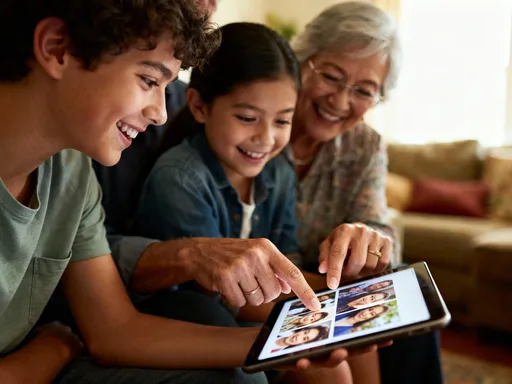
For older family members, especially those less confident with technology, photo editing apps can be surprisingly welcoming. My mother-in-law, who once thought 'the cloud' was a weather term, now regularly uploads scanned photos from the 1980s and asks us to help restore them. She doesn’t need to master every tool—she just needs to say, 'This one of your dad playing guitar—can we make the colors warmer?' And we do. The act of asking, of trusting us to help, has deepened our bond in ways I never expected. Technology, when used with intention, doesn’t replace human connection. It can actually make space for it—especially when words fall short.
From Chaos to Coordination: Aligning on Memories, One Edit at a Time
We all remember the same events differently. That’s normal. But sometimes, those differences can lead to misunderstandings. One person recalls a birthday party as joyful; another remembers feeling left out. One sibling remembers a vacation as peaceful; another remembers constant bickering. These divergent memories aren’t lies—they’re perspectives. And when left unspoken, they can quietly create distance.
What I’ve learned is that photo editing, when done together, becomes a gentle way to reconcile those perspectives. When we crop a photo, we decide together what stays in the frame—and what that says about what matters. When we add a caption, we choose how to tell the story. When we adjust the tone, we decide whether the mood is playful, tender, or nostalgic. These small decisions, made collaboratively, help us build a shared understanding of our past.
Take last year’s holiday gathering. My sister and I had very different feelings about it. For her, it was stressful—she’d been juggling work and kids, and felt like she didn’t get to enjoy it. For me, it was one of the coziest nights we’d had in years. When we opened the shared album to edit the photos, she hesitated. 'I don’t know if I want to relive that,' she admitted. So we started slow. We picked one photo—just the two of us by the fireplace, wrapped in blankets, sipping cocoa. I suggested a soft, warm filter. She added a caption: 'Even when it’s messy, we’re still here.' That simple edit became a turning point. It didn’t erase the stress, but it helped us both see the moment more fully—not just what was hard, but what was still good.
Over time, these collaborative edits add up. We’re not rewriting history. We’re creating a living archive—one that reflects not just what happened, but how we choose to remember it together. And that makes all the difference.
Building Routines Around Shared Screens: The Power of Weekly Photo Nights
Life moves fast. Between school pickups, work deadlines, and grocery runs, it’s easy to lose touch with the people we love—even when we live under the same roof. That’s why we started 'Photo Nights' in our house. Every Sunday after dinner, we gather in the living room with mugs of tea, a plate of cookies, and our devices. We open our shared family album and spend 30 to 45 minutes reviewing the week’s photos—school plays, dog walks, backyard sunsets, even the burnt toast incident on Tuesday morning.
At first, it felt a little forced. 'Are we really going to spend our evening staring at screens?' my husband joked. But within weeks, it became something we all looked forward to. These aren’t silent scrolling sessions. They’re full of commentary: 'Wait, why is the dog wearing a hat?' 'Oh, I forgot about that surprise visit from Aunt Lisa!' 'Can we make this one black-and-white? It feels more dramatic.' We laugh, we pause, we sometimes get quiet. And in those moments, we’re not just editing photos—we’re checking in. My son once said, 'This is when I feel like everyone’s really listening.'
The ritual itself is simple, but the impact isn’t. By dedicating regular time to reflect on our lives together, we’re sending a quiet message: 'You matter. This moment matters. I see you.' And because we use cross-platform apps that sync across phones, tablets, and laptops, distance doesn’t stop us. When my sister moved across the country, she joined our Photo Nights remotely. She’d comment in real time, suggest edits, and even surprise us by adding a silly frame around a photo of my husband snoring on the couch. Technology could have pulled us apart. Instead, we used it to pull us closer.
These nights have also become unexpected emotional check-ins. When my daughter was struggling with a friendship issue, she didn’t bring it up directly. But when we edited a group photo from school, she quietly asked, 'Can we crop Sarah out?' I didn’t push. I just said, 'Sure. Want to tell me what happened?' And she did. Sometimes, the safest way to start a hard conversation is through a photo.
Teaching Values Without Saying a Word: Patience, Perspective, and Ownership
As parents, we’re always looking for ways to teach our kids about empathy, responsibility, and respect. We talk about them. We read books. We try to model them. But some lessons sink in deeper when they’re learned through action. That’s what’s happened with photo editing in our home. What started as a fun activity has quietly become a classroom for emotional intelligence.
Take the simple act of choosing which photo to keep from a series of five nearly identical shots. My son recently had to decide which image of his little sister blowing out birthday candles made the final cut. One had her eyes closed. One had cake smeared on her nose. One was perfectly lit, but she wasn’t smiling. He chose the one where she was mid-laugh, frosting on her cheek. 'It feels like the real moment,' he said. In that choice, he was learning to value authenticity over perfection. He was also learning that his decisions affect how others are seen—and that’s a powerful realization for a 10-year-old.
Then there’s the issue of compromise. Kids love filters—especially the ones that turn your face into a bunny or add rainbow vomit. We’ve had our share of debates. But instead of saying 'no' outright, we talk about the purpose of the photo. 'Is this for a silly meme or for Grandma’s birthday card?' That simple question helps them think about audience and intention. Slowly, they start to understand that editing isn’t just about what you want—it’s about what serves the memory and the people in it.
Even small actions, like undoing a change or asking permission before deleting a photo, teach digital citizenship. When my daughter accidentally removed a photo my mom had labeled 'precious,' she felt terrible. But instead of scolding her, we used it as a chance to talk about backups and communication. She wrote a note in the album: 'Sorry I deleted this, Grandma! I restored it. Love, your clumsy but learning granddaughter.' My mom’s reply? 'Mistakes are how we grow. And I love that you cared enough to say something.'
Choosing the Right Tools: Simplicity, Accessibility, and Emotional Safety
Not all photo apps are created equal—especially when it comes to family use. I’ve tried more than a few that promised collaboration but delivered frustration. Too many buttons. Confusing sharing settings. One app even deleted an entire folder after a sync error. That’s why I’m careful about what we use now. The right tool doesn’t just work well—it feels safe, welcoming, and inclusive.
For us, the best apps have a few key features. First, they’re simple. One-tap adjustments for brightness, contrast, and color make it easy for everyone to participate, even if they’ve never edited a photo before. Second, they support real-time collaboration. When my sister adds a caption, I see it instantly. When my dad rotates a photo, it updates for everyone. No emailing files back and forth. No 'Wait, is this the latest version?' confusion.
Third, they prioritize privacy. We don’t need our family memories floating around on public feeds. We want a space that’s just for us—secure, password-protected, with clear controls over who can view or edit. And finally, emotional safety matters. Features like version history and easy undo options mean no one has to panic over a mistake. We once spent 20 minutes perfecting a collage, only for my nephew to accidentally tap 'revert to original.' Instead of tears, we just laughed and started over. The app made it easy to recover, and that small relief made a big difference in how we felt about the process.
We’ve also learned to avoid apps that push constant notifications or try to sell us upgrades. The goal isn’t to spend more time on our phones—it’s to spend more meaningful time together. So we choose tools that support that intention, not distract from it.
Beyond the Album: How Small Digital Habits Create Lasting Family Harmony
If you’d told me five years ago that photo editing would become one of the most meaningful parts of my family life, I would’ve laughed. But here we are. What began as a way to fix blurry images has grown into a quiet practice of connection, understanding, and love. We’re not creating a perfect digital scrapbook. We’re building something far more valuable: a shared sense of belonging.
Each edit—cropping out a distraction, enhancing a smile, choosing the right filter—becomes a small act of care. Each comment, each shared laugh, each moment of silence while we decide how to frame a memory, adds to the emotional fabric of our family. We’re not just preserving the past. We’re shaping how we remember it—and how we move forward together.
And the truth is, we don’t need grand gestures to feel close. We don’t need expensive trips or elaborate traditions. Sometimes, all it takes is a shared screen, a few simple tools, and the willingness to say, 'Let’s fix this together.' In that space, we find more than better photos. We find each other.
So the next time you’re about to delete a 'bad' photo, pause. Show it to someone you love. Ask, 'What do you see here?' Then open an app, make a small change, and start talking. You might be surprised at how much a little editing can heal, connect, and transform—not just the image, but your family’s story.