I keep missing my goals was my reality: How a Q&A platform reshaped my daily rhythm
"I keep missing my goals" was something I whispered to myself every night, staring at a to-do list that somehow grew longer no matter how much I crossed off. I wasn’t lazy — far from it. I was working hard, but I felt like I was running on a treadmill going nowhere. My energy crashed by 2 p.m., my focus scattered like leaves in the wind, and my sense of accomplishment? Almost nonexistent. I kept thinking, If only I had more time, more willpower, more discipline. But the real issue wasn’t effort — it was alignment. Then one sleepless night, I typed a simple, raw question into a knowledge-sharing platform: Why can’t I stick to anything? That single post didn’t just get answers — it started a quiet revolution in my daily life. Not because of flashy hacks or extreme productivity systems, but because real people shared real solutions that fit real lives. This isn’t a story about perfection. It’s about progress, rhythm, and finally feeling like I’m living a life that’s truly mine.
The Wake-Up Call: When "Busy" Stopped Equaling "Productive"
For years, I wore "busy" like a badge of honor. I’d wake up early, pack my planner with color-coded tasks, and power through emails before the kids even got out of bed. I believed that if I could just do more, faster, I’d finally feel in control. But the truth? The more I did, the more exhausted I became. My shoulders ached from tension, my mind felt foggy by midday, and I’d end each evening with a strange mix of guilt and emptiness. I was checking boxes, but I wasn’t moving forward. I wasn’t growing. I was just… surviving.
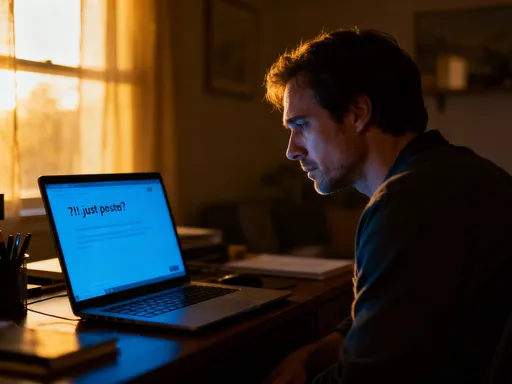
One Tuesday, after canceling dinner plans for the third time because I was "too drained," I sat on the couch with my laptop open, not to work, but to escape. I typed into a search bar: Why do I feel tired all the time even when I’m not sick? That’s how I found the Q&A platform — not through a friend’s recommendation or a viral post, but out of sheer desperation. At first, I just read. I scrolled through threads from people who described the same emotional fatigue, the same frustration with their routines, the same cycle of starting strong and fading fast. And for the first time, I didn’t feel broken. I felt seen.
What struck me most was how the answers weren’t about pushing harder. They were about listening — to your body, your energy, your emotions. One woman wrote, I stopped trying to be productive like a CEO and started paying attention to when I actually felt focused. Turns out, my brain works best between 8 a.m. and 10 a.m., not after dinner like I’d been forcing it. Another shared, I used to feel guilty for napping. Now I see it as recharging my system so I can show up fully for my family. These weren’t grand declarations of success. They were honest, humble reflections from people who had stopped fighting themselves and started working with their natural rhythms.
That night, I didn’t get a magic solution. But I got something better: permission. Permission to slow down. Permission to question the way I’d been doing things. And most importantly, permission to ask for help — not from a guru or a $2,000 course, but from other real people just trying to live better, calmer, more meaningful days.
Finding Real People Behind the Answers
Before that night, I’d always turned to self-help books or productivity blogs when I felt stuck. But there was something different about this platform. It wasn’t polished. It wasn’t selling anything. It was raw, real, and refreshingly imperfect. I remember reading a post from a mom in Toronto who said, I used to think I had to do everything perfectly — meals from scratch, spotless house, PTA meetings. Now I make peace with frozen pizza and a messy living room because my kids don’t care about clean baseboards. They care that I’m present. That hit me like a wave. How many times had I chosen cleaning over connecting? How often had I prioritized appearance over authenticity?
What I loved was that people weren’t just sharing tips — they were sharing their lives. A teacher in Austin talked about using five-minute breathing exercises between classes to reset her nervous system. A nurse in Chicago described how she started leaving her phone in her locker during shifts so she could actually listen to her patients — and herself. A stay-at-home dad in London wrote about how he began scheduling "focus blocks" for his side project, protecting that time like a doctor’s appointment.
These weren’t CEOs or influencers. They were everyday people — parents, caregivers, professionals, creatives — who had figured out small ways to protect their energy and honor their limits. And because their advice came from lived experience, not theory, it felt trustworthy. I wasn’t being told what to do. I was being invited to experiment. One woman suggested, Try tracking your energy for three days. Just jot down how you feel every two hours. You might be surprised. I did. And what I discovered changed everything.
My energy wasn’t steady. It peaked in the morning, dipped after lunch, and had a small second wind in the early evening. Yet I’d been scheduling my most demanding tasks — writing, planning, deep thinking — for the afternoon, when my brain was practically on standby. No wonder I felt like a failure. I wasn’t failing. I was misaligned.
Asking the Right Questions Changed Everything
For a long time, I thought the key to change was finding the right answers. But what I learned on the platform was that the real power was in asking the right questions — honestly, specifically, and without shame. My first post — Why can’t I stick to anything? — was vague. But the responses helped me dig deeper. One person asked, What exactly do you mean by "stick to"? Is it motivation? Time? Clarity of purpose? Another wrote, Do you lose interest, or do you feel overwhelmed? Those questions made me pause. I realized I wasn’t lacking discipline. I was lacking direction.
So I posted again: Why do I lose motivation by Wednesday? This time, the responses were even more helpful. Someone pointed out that midweek is often the emotional low point for many people — not because of laziness, but because the initial momentum of Monday has faded, and the weekend feels too far away. Another shared a simple but powerful idea: Maybe you’re not meant to maintain the same energy all week. What if you designed your week to have natural rhythms — high effort, recovery, reflection, reset?
That idea shifted my mindset completely. I stopped seeing my midweek slump as a personal flaw and started seeing it as a signal — a cue to slow down, reassess, and recharge. I began scheduling lighter tasks for Wednesdays — admin work, organizing, or simple check-ins — and reserving my heavier mental lifts for Mondays and Tuesdays. I also started ending my workweek with a 10-minute reflection: What worked? What drained me? What do I want to carry forward?
The beauty of the platform was that it didn’t give me a one-size-fits-all solution. It gave me a space to be curious, to explore, and to learn from others who had walked similar paths. And because the advice came from people who weren’t trying to sell me anything, it felt safe to try — and to fail. One woman wrote, I tried bullet journaling for six months and hated it. Then I switched to voice notes and it changed my life. That gave me permission to experiment without pressure. Progress wasn’t about sticking to a system. It was about finding what worked for me.
Small Tweaks, Big Shifts in Daily Flow
One of the most practical tools I discovered on the platform was "energy mapping." A user explained how she tracked her energy levels for a week, rating them from 1 to 10 every two hours. Then she color-coded her calendar based on when she felt most alert, creative, or calm. Inspired, I did the same. For seven days, I carried a small notebook and jotted down how I felt at 8 a.m., 10 a.m., noon, 2 p.m., 4 p.m., and 8 p.m. I didn’t expect much. But the pattern was undeniable: my highest focus window was 8 a.m. to 10:30 a.m. After lunch, my energy dipped sharply, and I didn’t rebound until around 6 p.m.
So I redesigned my day. I moved my most important tasks — writing, planning, problem-solving — to the morning. I scheduled meetings and calls for the afternoon, when I had enough energy to engage but didn’t need deep focus. And in the early evening, when I had that second wind, I reserved time for creative projects — something I’d been putting off for years. The difference was immediate. I finished work earlier. I felt less stressed. And for the first time in ages, I had energy left for my family — and for myself.
Another game-changer was "question journaling." A therapist on the platform suggested asking yourself one reflective question each night, like What made me feel calm today? or When did I feel most like myself? I started with What drained me today? and What refilled me? At first, it felt awkward. But over time, I noticed patterns. I saw that back-to-back video calls drained me, but a walk with my dog refilled me. That planning meals in advance reduced my stress, but scrolling social media left me feeling empty.
These weren’t revolutionary insights. But they were personal insights. And that made all the difference. I began making small adjustments: I blocked time between meetings, I limited screen time before bed, I started meal prepping on Sundays. Each change was tiny, but together, they created a new rhythm — one that felt sustainable, not stressful.
Building Rhythm, Not Just Routine
I used to think routine meant rigidity. I believed that if I wasn’t following a strict schedule, I was failing. But the people on the platform taught me something different: routine can be flexible. Rhythm is about flow, not force. One woman wrote, I don’t have a schedule. I have a rhythm. Some days I wake up early and write. Other days I sleep in and read. I’ve learned to trust my body instead of fighting it.
That resonated deeply. I started letting go of the idea that every day had to look the same. Instead, I focused on creating a weekly rhythm. Mondays became my planning and power days. Tuesdays and Wednesdays were for execution. Thursdays were lighter — reflection, connection, and creativity. Fridays were for closure and celebration, no matter how small. Weekends were for rest, family, and joy — not catching up on work.
The biggest shift was learning to say no — not out of guilt, but out of clarity. When someone asked me to take on a new project, I’d ask myself: Does this align with my energy? Does it support my values? Will it refill me or drain me? If the answer was no, I declined — politely, confidently. I stopped apologizing for needing rest. I stopped feeling guilty for not being "on" all the time. And slowly, I began to feel more like myself.
Another user shared a phrase that became my mantra: Protect your peace like it’s your job. And in a way, it is. When I protect my energy, I show up better for my family, my work, and my own well-being. I’m more patient. More present. More joyful. That doesn’t mean every day is perfect. Some days are still messy, overwhelming, or exhausting. But now, I have tools. I have awareness. And I have a community that reminds me I’m not alone.
Growing Alongside a Community of Learners
One of the most unexpected joys of being on the platform was realizing I had something to offer, too. At first, I was just a reader — soaking in advice, trying new things, staying quiet. But after a few months, I noticed a post from someone asking, How do you start when you feel completely stuck? I knew that feeling. I’d lived it. So I wrote a response — not as an expert, but as someone who had been there. I shared how I started with one small question, one tiny change, and how that led to a ripple effect.
When I hit "post," I felt nervous. What if my advice wasn’t good enough? What if I sounded silly? But then I got a message: Thank you. This made me feel less alone. That one sentence did something powerful. It reminded me that growth isn’t just about receiving — it’s about giving. Answering questions helped me reflect on my own journey. It made me more aware of what had worked and why. And it gave me a sense of purpose — not because I was fixing anyone, but because I was connecting.
I started returning to the platform not just to solve problems, but to stay engaged. I’d read new posts, offer encouragement, share resources. I wasn’t performing. I wasn’t trying to impress. I was just showing up — as myself. And in doing so, I became part of something bigger: a community of people who weren’t chasing perfection, but progress. We weren’t experts. We were learners. And that made all the difference.
A Life That Feels Like Yours Again
Looking back, I can’t point to one single change that "fixed" everything. There was no magic pill, no 30-day challenge, no expensive program. What changed was my relationship with myself — and with the way I live each day. I’m not more productive in the traditional sense. But I am more aligned. I make fewer decisions out of guilt or pressure. I move through my days with more intention, more calm, and more joy.
I still have off days. I still forget things, overschedule, or feel overwhelmed. But now, I have a place to turn — not just the platform, but the mindset it helped me build. When I feel off track, I ask myself: What do I need right now? Is it rest? Clarity? Connection? And I listen. I’ve learned that self-awareness isn’t selfish — it’s essential. It’s the foundation of a life that feels like mine.
The platform didn’t give me a new identity. It helped me rediscover the one I’d lost beneath the noise of expectations and busyness. I’m not chasing goals to prove my worth. I’m living a life that reflects my values — presence, peace, purpose. And that, more than any checklist, is the real measure of success.
If you’re reading this and thinking, I keep missing my goals too, I want you to know: you’re not failing. You might just be misaligned. Try asking one honest question. Try listening to your energy. Try joining a space where people share not just advice, but their real, messy, beautiful lives. Progress isn’t loud. It’s quiet. It’s lived. And it’s possible — one small shift at a time.