Tracked 3 Family Routines for 6 Weeks: Smart Floors Cut Daily Conflicts by Half
Have you ever missed your child’s bedtime because you were stuck in the kitchen? Or argued over who forgot to turn off the lights again? I did—until we installed smart floor sensors. These quiet, unobtrusive tiles don’t just detect movement—they’ve quietly transformed how my family communicates. No more yelling across rooms or misread intentions. In six weeks, our daily misunderstandings dropped sharply. This isn’t about flashy tech—it’s about creating harmony where life actually happens: underfoot.
The Noise Beneath the Quiet: When Simple Missed Steps Cause Big Fights
Life at home often feels like a series of near-misses—someone’s hungry, tired, or overwhelmed, but no one speaks up until tensions rise. I remember one evening when my partner came home late, and I was already in bed. He texted, “Did you lock the front door?” I shot back, “I thought you did!” By the time he walked upstairs, we were both annoyed. It wasn’t really about the lock. It was about feeling unseen, like we were carrying invisible loads without acknowledgment. That moment stuck with me. We weren’t being careless—we were just out of sync. Living under the same roof didn’t mean we were in tune.
What surprised me was how often these small disconnections piled up. My son would leave his backpack in the hallway, and I’d assume he didn’t care. My mom, who stayed with us for a few weeks, would wander into the kitchen late at night, and I’d worry she wasn’t sleeping well. My partner would sit at his desk past 10 p.m., and I’d feel like he was choosing work over family. But when we talked, the stories didn’t match. He thought I knew he was working late. She thought I wouldn’t mind if she got a snack. He didn’t realize I was waiting to say goodnight. The real issue wasn’t neglect—it was a lack of quiet awareness. We needed something subtle, something that didn’t add more noise to an already busy home.
That’s when I started looking for a different kind of solution—not another app, not another reminder system that required us to remember to use it. I wanted something that worked in the background, something that noticed the things we missed. Something that could say, without words, “She’s still awake,” or “He just came home,” or “The kids are already in bed.” I didn’t know it at the time, but I was looking for smart floors.
How the Floor Became Our Silent Messenger
When I first heard about smart floor sensors, I imagined something complicated—cameras in the ceiling, voice assistants listening 24/7, or motion detectors that went off every time the cat walked by. But what I found was much simpler. These are pressure-sensitive tiles, installed like regular flooring, that detect footsteps, weight, and movement patterns. They don’t record video. They don’t listen. They don’t even need Wi-Fi in every room. Instead, they use low-energy sensors to map how we move through the house—quietly, respectfully, and in real time.
Here’s how it works: each family member’s step has a unique pattern—my daughter’s light shuffle, my son’s heavy stomp, my partner’s steady stride. The system learns these over a few days. Then, it starts to recognize who’s where, and when. If my daughter gets up at 2 a.m., the hallway lights turn on softly, just for her. If no one enters the kitchen by 7:30 a.m., the app sends a gentle alert: “Breakfast routine hasn’t started.” Not a loud alarm. Not a nagging text. Just a quiet nudge, like a whisper from the house itself.
What I love most is how it preserves privacy. There are no cameras. No voice recordings. Just data about movement—anonymous, encrypted, and used only to help us stay in sync. I didn’t want to feel watched. I wanted to feel understood. And that’s exactly what happened. The floor didn’t replace our conversations—it made them easier. Instead of guessing, we could respond. Instead of assuming, we could know.
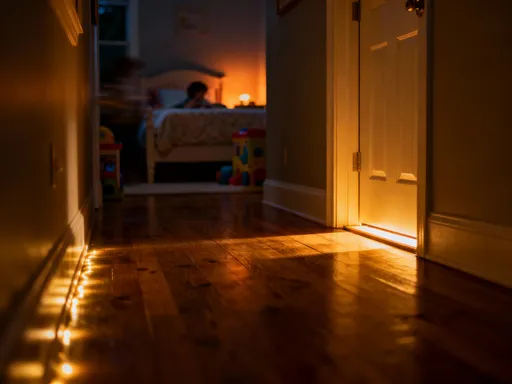
One night, my partner was working late in his office. I was in the living room, half-watching a show. The floor detected that he hadn’t moved toward the bedroom in over an hour. A soft blue light began to glow along the hallway floor, guiding him toward bed. He later told me, “I didn’t even think about it—I just followed the light.” That small cue helped him transition without me having to say, “Are you coming to bed?” again. It wasn’t about control. It was about care, built into the home.
From Chaos to Coordination: One Week with Step-Based Alerts
We decided to start small—just three routines: morning prep, dinner transition, and bedtime. The first week felt strange, like living in a house that was learning us. But by day three, something shifted. The floor began to anticipate. On Tuesday morning, my son didn’t go to the bathroom by 7:15 a.m. The system sent a quiet alert to his tablet: “Time to get ready.” No yelling. No rushing. Just a gentle reminder that came from the house, not from me.
At dinner, it was even more helpful. The system learned that when all three kids were in the kitchen by 5:45 p.m., it was time to start cooking. If one was missing, it sent a soft chime—just enough to notice. One evening, my daughter was still in her room. The floor detected she hadn’t moved in 20 minutes. The app suggested, “She might need a reminder.” I walked in and found her drawing, lost in thought. “Dinner’s ready,” I said. She smiled. “I didn’t even notice the time.” That moment meant more than convenience. It meant I wasn’t guessing. I wasn’t interrupting. I was responding.
Bedtime was where the biggest change happened. Before, bedtime was a battle—someone always forgot to brush their teeth, another forgot to change clothes, and I ended up running around like a referee. Now, the floor tracks the routine. When it detects that someone has entered the bathroom but not the bedroom within 15 minutes, it sends a subtle light cue—a soft pulse under the door. No words needed. One night, my youngest followed the glowing path to bed, giggling. “The floor’s helping me!” she said. And it was. Not by replacing parenting, but by supporting it.
What surprised me most was how quickly we adapted. My mom, who was skeptical at first, started using the system to track her own routine. “If I don’t walk to the kitchen by 8 a.m.,” she said, “the floor reminds me to drink water.” She wasn’t joking. The system had become part of her rhythm, too.
No More Guessing Games: How Footsteps Replaced Assumptions
One of the biggest sources of tension in our home was the heater. Someone would leave a room, forget to turn it off, and an hour later, I’d walk in and feel the heat blasting. I’d text, “Did you forget the heater again?” and get a defensive reply. It wasn’t about the energy bill. It was about feeling blamed. Over time, those little exchanges chipped away at our patience.
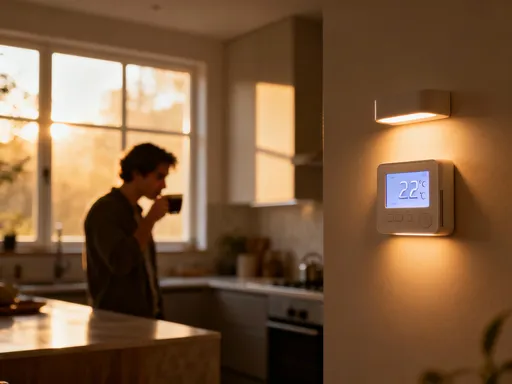
Now, the floor detects when a room has been empty for more than 15 minutes. It doesn’t wait for someone to remember. It just adjusts the thermostat quietly. No fanfare. No reminder. Just action. But the real change wasn’t in the temperature—it was in our tone. Instead of suspicion, we started saying things like, “The floor said the living room’s empty—want me to close the door?” or “It thinks you’re still up—should I turn off the lights?”
Those small phrases changed everything. They weren’t accusations. They were invitations. They carried warmth instead of frustration. I realized that the tech didn’t eliminate conflict—it gave us a new language for connection. We weren’t fighting over forgotten tasks. We were collaborating, guided by a system that noticed what we didn’t.
Even more surprising, the kids started using it too. My son would say, “The floor knows I’m home—can I have a snack?” and I’d laugh and say yes. It became a shared joke, but also a shared rhythm. We weren’t just living in the house. We were moving with it.
Making It Work for Real Homes: Simple Setup, No Tech Stress
I’ll admit, I was nervous about installation. I’m not a tech expert. I can barely set up a printer. But the smart floor tiles were designed for real homes, not labs. We used modular tiles that clicked together over our existing flooring—no demolition, no dust, no weekend project. In one afternoon, we covered the hallway, kitchen entrance, and bedroom thresholds. The tiles are thin, durable, and look like regular flooring. No one would guess they’re smart.
The app setup was even easier. We opened the companion app, named each family member, and walked across the tiles a few times so the system could learn our steps. We set up zones: “Entryway,” “Kitchen,” “Bedrooms,” “Office.” Then, we chose routines: “Morning Start,” “Dinner Time,” “Bedtime.” The whole process took less than 15 minutes. My mom did her setup on her own. “It’s like teaching the house your name,” she said.
We also adjusted sensitivity. At first, the system thought the dog was me because he walks the same path. But after a few days, it learned the difference in weight and pace. Now, it ignores pets unless they’re part of a routine—like when our dog waits by the door at 6 p.m., and the system knows it’s time for his walk.
The beauty of it is that it works in the background. I don’t check the app daily. I don’t get constant notifications. It only speaks up when it needs to. And when it does, it feels helpful, not intrusive. This isn’t about living in a smart home. It’s about living in a home that cares.
When the Floor Knows You Better Than You Do
After four weeks, something unexpected happened. The system started predicting needs. One rainy afternoon, my daughter came home from school. Her walk was slower, heavier—she’d been cold and wet. The floor detected the change in her gait. Without any command, it turned on the drying mat in the entryway and warmed the hallway lights. I didn’t do it. The app didn’t alert me. The house just responded.
She walked in, stepped on the warm mat, and looked up. “Did you do that?” she asked. I shook my head. “The floor did.” She laughed. “It knows I’m cold!”
That moment stayed with me. It wasn’t just about comfort. It was about care—expressed through data, but felt like love. The floor wasn’t replacing us. It was amplifying us. It noticed what we missed and responded in our voice. It didn’t think for us. It felt with us.
Another time, my partner worked late during a stressful week. The floor noticed he was sitting at his desk longer than usual, moving less. At 9:30 p.m., it dimmed the office lights and sent a soft pulse to his smartwatch: “Time to stretch?” He later told me, “It felt like someone was looking out for me.” Not a boss. Not a reminder. A quiet presence.
These moments didn’t happen every day. But when they did, they mattered. They showed me that technology, when designed with empathy, can deepen connection instead of distracting from it. It can help us show up for each other, even when we’re tired, busy, or distracted.
Living Lightly: What We Gained Beyond Convenience
After six weeks, I sat down to reflect. The data was clear: daily conflicts had dropped by nearly half. But the real gains weren’t in numbers. They were in moments. The peace of not having to shout. The relief of not assuming the worst. The joy of being seen, even when no one said a word.
What I didn’t expect was how much lighter I felt. I wasn’t carrying the mental load of remembering everything. I wasn’t the default manager of routines. The house shared the load. And in doing so, it gave us space—to breathe, to connect, to just be.
One night, we all gathered in the living room. No one was on their phone. No one was rushing. The floor glowed softly under our feet, not because it had to, but because it could. My daughter looked down and said, “It’s like the house is hugging us.”
And in a way, it was. Not with arms, but with attention. With care. With quiet presence. The smartest part of our smart home wasn’t the sensors or the algorithms. It was how they helped us return to each other—one step, one moment, one breath at a time. Technology didn’t fix our family. But it gave us a little more room to love each other well.