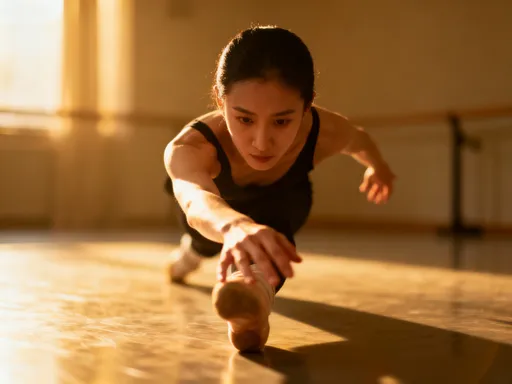
Why I Started Qigong for My Daily Energy — A Real Check-In
I used to feel drained by midday, no matter how much coffee I drank. Then I tried qigong — not as a cure, but as a way to check in with my body. Within days, I noticed subtle shifts: better focus, less tension, deeper breaths. This isn’t magic — it’s mindfulness in motion. Here’s how a simple practice became my go-to wellness barometer, and why you might want to test it too.
The Hidden Fatigue Epidemic – Why We Need Better Self-Checks
Many women in their 30s, 40s, and 50s report feeling tired almost constantly, even after a full night’s sleep. This kind of fatigue is often dismissed as a normal part of busy lives — juggling work, family, meals, and personal responsibilities. Yet persistent low energy is not just an inconvenience; it can be an early signal of deeper imbalances in the body’s systems. Unlike a fever or pain, which demand immediate attention, chronic fatigue creeps in quietly, accepted as routine. But what if this tiredness isn’t inevitable? What if it’s your body’s way of asking for a pause, a reset, a moment of attention?
Modern lifestyles are filled with subtle stressors: long hours sitting, constant screen exposure, emotional labor, and disrupted sleep cycles. These factors don’t always cause illness right away, but they deplete our reserves over time. Traditional Chinese Medicine (TCM), which has guided wellness practices for thousands of years, teaches that health begins with awareness. Rather than waiting for symptoms to escalate, TCM emphasizes daily self-checks — small rituals that help you stay in tune with your body’s rhythms. This is where qigong stands out. It is not marketed as a high-intensity solution or a quick fix, but as a gentle, consistent practice that allows you to observe how you truly feel from day to day.
Unlike caffeine, which masks fatigue with stimulation, or naps, which offer temporary relief, qigong works differently. It doesn’t override your body’s signals — it amplifies them. By slowing down movement and breath, you create space to notice tension in your shoulders, tightness in your chest, or a sense of mental fog. These are not flaws; they are messages. When practiced regularly, qigong becomes a kind of internal dashboard, helping you catch imbalances before they turn into more serious issues. For many women managing households and careers, this kind of self-awareness is not a luxury — it’s a necessity.
What Is Qigong? More Than Just Breathing Exercises
Qigong (pronounced “chee-gong”) is an ancient practice rooted in Traditional Chinese Medicine, designed to cultivate and balance *qi* — the vital energy believed to flow through all living things. While the concept of *qi* may sound abstract, the practice itself is grounded in tangible actions: slow, deliberate movements, coordinated with deep, rhythmic breathing and focused attention. It is not about achieving perfect poses or pushing physical limits. Instead, it’s about creating harmony between body, breath, and mind.
At its core, qigong has three essential components: posture, breath, and awareness. Posture ensures that energy can flow freely through the body. Even small adjustments — like aligning the spine or relaxing the shoulders — can make a noticeable difference in how you feel. Breath is the engine of the practice. Unlike shallow chest breathing, which is common during stress, qigong emphasizes abdominal breathing — deep, slow breaths that engage the diaphragm and activate the body’s relaxation response. Awareness is the third pillar. It’s not enough to go through the motions; you must pay attention to how each movement feels, where you hold tension, and how your mind responds.
While qigong shares similarities with yoga and tai chi, it is uniquely accessible. You don’t need special equipment, a lot of space, or prior fitness experience. Many forms can be done standing, sitting, or even lying down, making it suitable for people with limited mobility or chronic conditions. It is also adaptable to different energy levels — on days when you feel strong, you can deepen the movements; on low-energy days, you can simplify them without losing benefit. This flexibility is one reason why qigong is gaining recognition as a sustainable wellness practice, especially for women navigating the physical and emotional shifts of midlife.
A common misconception is that qigong is mystical or religious. In reality, it is a practical system with measurable effects on the nervous system, circulation, and muscle tension. It does not require belief in *qi* to work — just willingness to engage with the practice consistently. Think of it like learning to play an instrument: at first, the notes may feel awkward, but over time, your body learns the rhythm, and the results become clear. Qigong is not about supernatural energy; it’s about cultivating presence, resilience, and a deeper connection to your own physiology.
How Qigong Acts as a Daily Health Mirror
One of the most powerful, yet often overlooked, benefits of qigong is its ability to serve as a daily health mirror. When you move slowly and breathe deeply, your body’s subtle signals become easier to detect. A stiff neck, shallow breathing, or a racing mind — these are not just random discomforts. They are reflections of your current state, shaped by sleep quality, stress levels, emotional well-being, and even diet. Most people don’t notice these signals until they become loud — until tension turns into pain, or fatigue becomes burnout. Qigong changes that by creating a daily moment of stillness where you can observe your inner landscape.
Regular practice helps you establish a baseline — a sense of how your body feels when it’s balanced and calm. Over time, you begin to recognize deviations from that baseline. For example, you might notice that after a poor night’s sleep, your movements feel heavier, or your breath doesn’t flow as smoothly. Or after a stressful day, your shoulders stay tense even after the session ends. These observations are valuable. They give you real-time feedback about your well-being, much like checking your temperature or blood pressure. The difference is that qigong offers a holistic picture — not just a number, but a full-body experience.
This kind of self-awareness is especially important for women in midlife, who may be experiencing hormonal shifts, changing metabolism, or increased responsibilities. Instead of reacting to symptoms after they appear, qigong allows you to respond earlier, with more nuance. You might realize that certain foods leave you sluggish, or that unresolved emotions manifest as physical tightness. This doesn’t mean you need to fix everything at once — but simply noticing is the first step toward better choices. Over time, this practice fosters a kind of intuitive wisdom: you learn to trust your body’s signals and respond with care, not force.
Moreover, qigong encourages non-judgmental observation. You’re not trying to “fix” yourself during the practice; you’re simply witnessing. This mindset shift can be transformative. Many women carry internal pressure to perform, to be strong, to manage everything perfectly. Qigong offers a rare permission slip to slow down, to be imperfect, to listen. In that space, healing begins — not as a dramatic event, but as a quiet return to balance.
My 5-Minute Routine That Changed My Mornings
When I first started qigong, I assumed I needed long sessions to see results. I was wrong. What made the biggest difference was a simple five-minute routine I began doing every morning, right after brushing my teeth. It didn’t require special clothes, a mat, or even leaving my bedroom. Consistency, not duration, was the key. Over time, this short practice became the anchor of my day, setting a calm tone that carried into everything else I did.
Here’s the routine I follow, and that I recommend to anyone new to qigong:
First, I begin with gentle neck rolls. Standing with feet shoulder-width apart, I slowly tilt my head to the right, bringing my ear toward my shoulder, then roll it forward, to the left, and back. I repeat this five times in each direction, moving with my breath — inhaling as I tilt, exhaling as I roll. This simple movement releases tension that accumulates from looking at screens or holding stress in the neck.
Next, I shift to abdominal breathing. I place one hand on my belly and breathe in deeply through my nose, feeling my abdomen rise. I exhale slowly through my mouth, drawing the belly inward. I do this for one minute, focusing only on the rhythm of my breath. This activates the parasympathetic nervous system, signaling the body to relax.
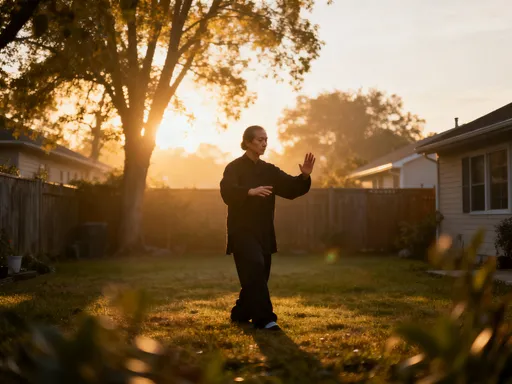
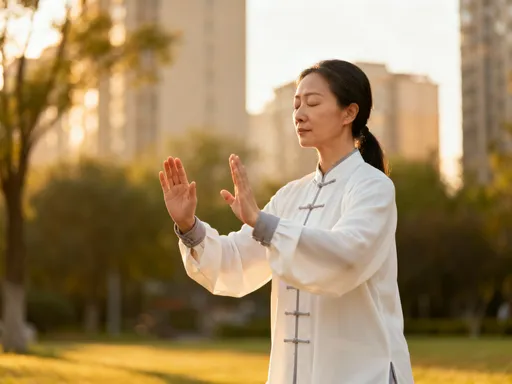
Then, I move into the “Standing Like a Tree” posture — one of the most foundational qigong stances. I stand with knees slightly bent, spine straight, shoulders relaxed. My arms are rounded in front of me, as if holding a large ball. I imagine roots growing from the soles of my feet into the earth. I hold this for two minutes, breathing slowly and noticing any sensations in my body. This posture improves balance, grounding, and energy flow.
Finally, I do “Hand Sweeping” — a gentle movement to stimulate energy circulation. With palms facing down, I slowly sweep my hands outward to the sides and then upward in front of my body, as if lifting a curtain. At the top, I turn my palms to face the sky, then slowly lower them back down, palms facing inward. I repeat this eight times, coordinating each motion with my breath. This movement encourages fluidity and openness in the chest and shoulders.
The beauty of this routine is its adaptability. On busy mornings, I might shorten it to three minutes. If I’m feeling particularly tense, I extend the standing posture. The goal isn’t perfection — it’s presence. By doing this daily, I’ve built a strong foundation of body awareness that makes longer sessions easier when I have the time.
What Science Says About Mind-Body Practices and Wellness
While qigong has roots in ancient tradition, modern science is increasingly recognizing its benefits. Research published in journals such as *Frontiers in Psychology* and *The Journal of Alternative and Complementary Medicine* has shown that regular qigong practice can reduce cortisol levels — the hormone associated with stress. Lower cortisol means less inflammation, better sleep, and improved mood. These changes are not dramatic overnight, but they accumulate over time, supporting long-term well-being.
Studies have also found that qigong can improve balance and coordination, which is especially important as we age. For women over 40, maintaining stability helps prevent falls and supports independence. Additionally, qigong has been shown to enhance parasympathetic nervous system activity — the branch of the nervous system responsible for rest, digestion, and recovery. When this system is underactive, we stay in a constant state of “fight or flight,” which drains energy and weakens immunity. Qigong helps shift the body back into “rest and digest” mode, promoting deeper relaxation and better recovery.
Other research indicates that mind-body practices like qigong can lead to measurable improvements in blood pressure, mood, and fatigue levels. A 2019 meta-analysis of multiple studies concluded that qigong had a moderate but consistent effect on reducing symptoms of anxiety and depression. While it is not a substitute for professional mental health care, it can be a valuable complementary practice. The key is consistency — benefits are most apparent in those who practice regularly, even for short durations.
It’s important to note that science does not claim qigong is a cure for disease. Rather, it supports the idea that this practice promotes healthier physiological states and encourages mindful living. The movements themselves may seem simple, but their impact on the nervous system, circulation, and muscle tension is real. For women managing the demands of family, work, and personal health, having a low-cost, low-risk tool that supports resilience is invaluable.
Common Mistakes That Block Progress (And How to Avoid Them)
Many people try qigong and give up within a few weeks, not because it doesn’t work, but because they expect immediate results or judge themselves too harshly. One of the most common mistakes is rushing through the movements. Qigong is not about speed or performance. When you move too quickly, you lose the connection between breath and motion, and the practice becomes just another task on your to-do list. The solution is simple: slow down. Even if you only have two minutes, move as if you have ten. Let each motion unfold with intention.
Another frequent error is holding tension without realizing it — clenched jaws, tight shoulders, or shallow breathing. The goal of qigong is relaxation, not effort. If you notice tension, gently release it. You can even place a hand on the tense area and breathe into it, imagining the breath softening the muscle. This small act of attention can make a big difference.
Some practitioners compare themselves to others — to videos online or to more experienced practitioners. This creates unnecessary pressure. Remember, qigong is not a performance. It’s a personal practice. Your version of “Standing Like a Tree” may look different from someone else’s, and that’s okay. What matters is how it feels in your body, not how it looks to an observer.
To avoid these pitfalls, use tools that support consistency. Set a timer for five minutes. Practice at the same time each day to build habit. Focus on breath quality rather than perfect form. And most importantly, embrace imperfection. Some days, your mind will wander. Some days, you’ll feel stiff or distracted. That’s normal. The practice isn’t about achieving a perfect state — it’s about showing up, again and again, with kindness and curiosity.
Making Qigong a Lifelong Habit – Beyond the Hype
Sustaining any wellness practice over time requires more than motivation — it requires integration. Qigong works best when it becomes part of your daily rhythm, not something you do only when you’re stressed or tired. The most effective way to build this habit is to pair it with an existing routine. Try doing your five-minute sequence after brushing your teeth, before lunch, or during a work break. Linking it to a familiar action increases the likelihood that you’ll stick with it.
Another powerful strategy is tracking subtle changes. Keep a simple journal or mental note of how you feel before and after each session. Do you feel calmer? More centered? Less tense? Over time, these observations become personal data — evidence of the practice’s impact. This kind of feedback reinforces commitment, especially on days when motivation is low.
It’s also helpful to adjust your expectations. Qigong is not a miracle cure. It won’t erase all stress or solve every health issue. But it can be a reliable compass — a way to stay connected to your body and make wiser choices. When you feel grounded and aware, you’re more likely to choose nourishing foods, set healthy boundaries, and seek help when needed.
For women navigating the complexities of midlife, qigong offers something rare: a moment of stillness, a chance to listen, and a tool for long-term resilience. It doesn’t require hours of time or expensive equipment. It asks only for your attention — five minutes a day to check in, breathe, and remember that your body is always speaking. The question is, are you listening?
Always consult a healthcare provider for medical concerns. Qigong is a complementary practice and should not replace professional medical advice, diagnosis, or treatment.