How I Found My Natural Rhythm with Qigong — And Why It Actually Works
For years, I felt out of sync—tired in the mornings, wired at night, constantly drained. I tried sleep trackers, supplements, even strict schedules, but nothing stuck. Then I discovered qigong, not as a quick fix, but as a way to reset my body’s natural rhythm. After just a few weeks of consistent practice, my energy levels evened out, my focus sharpened, and I started waking up feeling truly rested. This is how it changed my life.
The Modern Life Out of Sync
In today’s fast-paced world, many people experience a quiet but persistent disconnection from their body’s natural timing. Mornings begin with groggy alarms, afternoons drag with mental fog, and evenings buzz with restless energy that delays sleep. This pattern is not random—it reflects a growing misalignment between modern lifestyles and the biological rhythms humans evolved to follow. The 24/7 availability of digital devices, irregular work hours, and constant mental stimulation have disrupted the delicate balance of our circadian system. For women between 30 and 55, this imbalance often feels amplified by family responsibilities, career demands, and hormonal shifts that affect energy and mood.
The human body operates on a roughly 24-hour internal clock, known as the circadian rhythm, which regulates sleep-wake cycles, hormone release, digestion, and body temperature. This rhythm responds primarily to light and darkness, but it is also influenced by routine, stress levels, and physical activity. When these signals become inconsistent or conflicting—such as checking bright screens late at night or skipping meals due to a packed schedule—the body struggles to maintain equilibrium. Over time, this chronic disruption can lead to fatigue, irritability, difficulty concentrating, and a weakened immune response. The result is a cycle of exhaustion and overstimulation that feels difficult to escape.
Many turn to solutions like caffeine, sleep aids, or fitness apps to regain control, but these often address symptoms rather than root causes. While helpful in moderation, they do not teach the body how to self-regulate. What’s needed is not another external tool, but a return to internal awareness—a way to listen to and support the body’s natural signals. This is where practices like qigong offer a different path, one that works with the body rather than against it.
What Qigong Really Is (Beyond the Hype)
Qigong (pronounced “chee-gong”) is an ancient practice rooted in traditional Chinese medicine, with a history spanning thousands of years. At its core, qigong is about cultivating and balancing qi—the vital energy believed to flow through all living things. While the concept of qi may sound abstract, in practical terms, it refers to the body’s innate capacity for healing, vitality, and resilience. Qigong achieves this balance through a combination of gentle physical movements, coordinated breathing techniques, and focused mental awareness. Unlike high-intensity workouts or complex meditation systems, qigong is accessible to nearly everyone, regardless of age, fitness level, or prior experience.
It’s important to clarify what qigong is not. It is not a martial art, though some forms have martial origins. It is not a religious practice, nor does it require any specific belief system. Instead, it functions as a holistic self-care tool, much like yoga or tai chi, designed to harmonize body, breath, and mind. Movements in qigong are slow, flowing, and intentional, often mimicking natural elements like water, wind, or trees swaying in the breeze. These motions are not meant to build muscle or burn calories, but to stimulate energy flow, release tension, and improve coordination between the nervous and muscular systems.
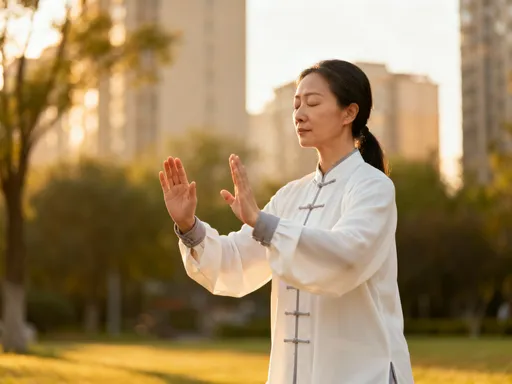
One of the most appealing aspects of qigong is its simplicity. A typical session might involve standing in a relaxed posture, breathing deeply into the lower abdomen, and performing a sequence of small, circular arm movements. The emphasis is on consistency and awareness, not performance. Because it requires no special equipment or space, it can be practiced at home, in a garden, or even during a short break at work. Over time, regular practice helps individuals develop a deeper connection with their body’s subtle signals—such as changes in breath, posture, or emotional state—enabling them to respond more effectively to stress and fatigue.
Why Qigong Aligns with Your Body’s Rhythm
From a physiological standpoint, qigong supports the body’s natural rhythms by influencing the autonomic nervous system—the part of the nervous system that controls involuntary functions like heart rate, digestion, and respiration. This system has two main branches: the sympathetic nervous system, which activates the “fight-or-flight” response, and the parasympathetic nervous system, which promotes “rest-and-digest” functions. In modern life, many people live in a state of chronic sympathetic dominance, where stress hormones like cortisol remain elevated for long periods. This imbalance can interfere with sleep, weaken immunity, and contribute to feelings of burnout.
Qigong helps shift the body toward parasympathetic dominance through slow, rhythmic breathing and mindful movement. When practiced regularly, these techniques signal safety to the brain, reducing cortisol levels and encouraging the release of calming neurotransmitters like GABA and serotonin. Research has shown that controlled breathing, a central component of qigong, can directly influence heart rate variability (HRV), a key marker of nervous system flexibility and resilience. Higher HRV is associated with better stress management, improved sleep quality, and greater emotional stability—all of which support a more balanced daily rhythm.
Additionally, qigong’s emphasis on timing and repetition mirrors the body’s natural cycles. Just as the sun rises and sets in a predictable pattern, qigong routines are often performed at the same time each day, reinforcing the body’s internal clock. This consistency helps regulate the production of melatonin, the hormone responsible for sleep onset. Unlike pharmaceutical interventions, which can disrupt natural hormone cycles, qigong works gently and cumulatively, allowing the body to re-establish its own timing without dependency. It is not a cure-all, but a supportive practice that enhances the body’s innate ability to self-regulate.
My Daily 10-Minute Routine That Made a Difference
When I first began exploring qigong, I was skeptical. I had tried so many wellness trends that promised results but delivered little. What changed my mind was the simplicity and structure of a short morning routine I learned from a certified instructor. I committed to just ten minutes a day, starting with basic movements that required no prior knowledge. The first step was standing in a relaxed posture, feet shoulder-width apart, knees slightly bent, and spine aligned. This stance, known as “standing like a tree,” may seem passive, but it trains the body to be present and grounded.
From there, I moved into abdominal breathing—inhaling slowly through the nose, allowing the lower belly to rise, and exhaling fully through the mouth. I focused on making the exhale longer than the inhale, which naturally activates the parasympathetic nervous system. After a few minutes of breathwork, I began a simple movement called “lifting the sky.” With palms facing up, I slowly raised my arms in front of me to shoulder height, then overhead, imagining I was gently lifting a weightless ball of energy. As I lowered my arms back down, I visualized releasing tension into the earth. I repeated this sequence five times, moving in sync with my breath.
The key was consistency. I practiced at the same time every morning, shortly after waking, before checking my phone or starting household tasks. This timing helped anchor my circadian rhythm, sending a clear signal to my body that the day had begun. Within two weeks, I noticed subtle shifts—less morning grogginess, fewer midday energy crashes, and an easier transition into sleep at night. I didn’t push for dramatic changes; instead, I focused on showing up, even on days when I felt too busy or tired. Over time, those ten minutes became a non-negotiable part of my routine, not because it was difficult, but because it made me feel more like myself.
When and How to Practice for Maximum Effect
To get the most benefit from qigong, timing and environment matter. Morning practice, ideally within an hour of waking, helps set a calm and centered tone for the day. The body is naturally transitioning from rest to activity, and gentle movement can support this shift without triggering stress. Evening practice, on the other hand, is best suited for relaxation and preparation for sleep. A short session before bed—focusing on slow breathing and downward movements—can help quiet the mind and signal to the body that it’s time to wind down.
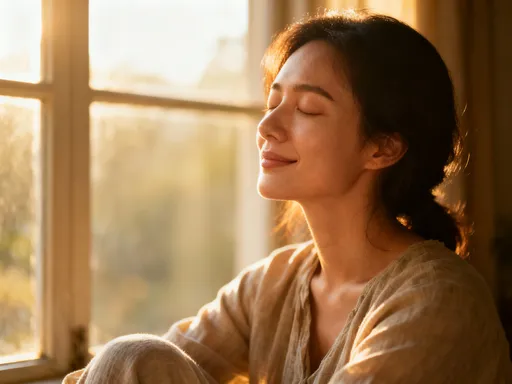
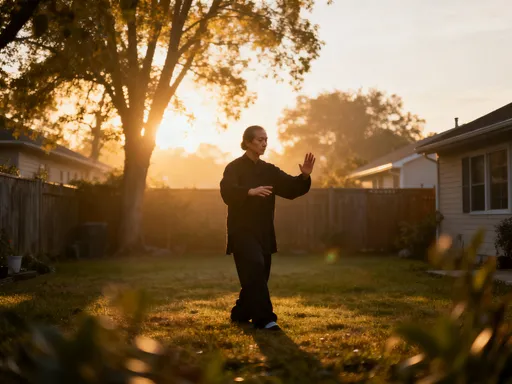
Pairing qigong with natural cues enhances its effectiveness. Practicing near a window with morning light exposure helps regulate melatonin and cortisol levels. Similarly, doing a few movements outside in the evening, as the sun sets, can reinforce the body’s awareness of day-night transitions. Even small adjustments, like opening a curtain or stepping onto a porch, can deepen the connection between practice and environment.
For beginners, starting with just five to ten minutes is ideal. The goal is not to master complex sequences, but to build a sustainable habit. Choose one or two simple movements—such as “lifting the sky” or “rocking the body”—and repeat them with attention to breath and posture. Wear comfortable clothing, stand on a non-slip surface, and keep distractions to a minimum. A quiet corner of a bedroom or living room is sufficient; no special equipment is needed.
Mindset is equally important. Approach the practice with patience and curiosity, not judgment. Some days will feel easier than others, and that’s normal. The benefits of qigong accumulate over time, much like compound interest. It’s not about achieving perfection in form, but about cultivating presence. Over weeks and months, this daily act of showing up—even briefly—can lead to profound shifts in energy, mood, and overall well-being.
What Science Says—And What It Doesn’t
While qigong has been practiced for centuries, modern science is beginning to validate many of its reported benefits. Numerous studies have explored its effects on stress, sleep, and energy regulation, with promising results. Research published in journals such as *Complementary Therapies in Medicine* and *Evidence-Based Complementary and Alternative Medicine* has found that regular qigong practice is associated with reduced cortisol levels, improved sleep quality, and enhanced mood in adults. These changes are believed to stem from qigong’s ability to modulate the autonomic nervous system and reduce inflammation, both of which play a role in chronic fatigue and stress-related conditions.
One study involving middle-aged women found that those who practiced qigong for 12 weeks reported significant improvements in sleep duration and daytime alertness compared to a control group. Another review of multiple clinical trials concluded that qigong may help regulate circadian rhythms, particularly in individuals with disrupted sleep patterns. While these findings are encouraging, it’s important to note that research in this area is still evolving. Many studies have small sample sizes or varying methodologies, and qigong encompasses a wide range of styles, making it difficult to generalize results.
What the science consistently shows, however, is that low-intensity mind-body practices like qigong can have meaningful physiological and psychological effects. Unlike pharmaceutical interventions, which often come with side effects, qigong is safe, low-cost, and accessible. It does not promise instant results or miraculous cures, but rather supports the body’s natural capacity for balance. For many, the most compelling evidence comes not from data, but from personal experience—the feeling of waking up more easily, the reduction in evening anxiety, the sense of being more grounded throughout the day.
Making It Stick: From Experiment to Habit
One of the biggest challenges in adopting any new wellness practice is consistency. Many people try qigong for a few days, then stop when immediate results don’t appear. This is understandable—modern culture often emphasizes quick fixes and measurable outcomes. But qigong works differently. Its power lies in repetition and patience, not intensity or speed. The shift it creates is subtle, like adjusting the hands of a clock rather than resetting it with a jolt.
To make qigong a lasting habit, it helps to reframe it not as a task, but as a form of self-respect. Instead of asking, “Do I have time for this?” consider, “What would it feel like to give myself ten minutes of calm each day?” Linking the practice to an existing routine—such as after brushing teeth or before making coffee—can also improve adherence. Some find it helpful to set a gentle reminder on their phone or place a mat in a visible spot as a visual cue.
Motivation will fluctuate, and that’s normal. On busy or stressful days, even three minutes of slow breathing can maintain the connection. The goal is not perfection, but continuity. Over time, the body begins to anticipate and respond to the practice, much like it does with regular meals or sleep. As this rhythm strengthens, the benefits extend beyond the practice itself—improved focus, better emotional regulation, and a greater sense of control over one’s energy.
For women navigating the demands of midlife, qigong offers a rare gift: a moment of stillness that requires nothing but presence. It does not demand hours of commitment or drastic lifestyle changes. It simply asks for a few quiet minutes, repeated with care. In that space, something shifts—not because of force, but because of attention.
Conclusion
Qigong didn’t transform me overnight—but it did help me reconnect with my body’s natural rhythm in a way nothing else had. It’s not about perfection, but presence. By showing up each day, even for a few quiet minutes, we can begin to move in tune with the life we’re meant to live. In a world that often feels chaotic and demanding, qigong offers a gentle, sustainable path back to balance. It reminds us that health is not just the absence of illness, but the presence of harmony—between breath and movement, effort and ease, body and time. And sometimes, the most powerful changes begin with the softest steps.